
In today’s fast-paced world, advanced automation tech is reshaping industries and redefining how businesses operate. From manufacturing to healthcare, these cutting-edge technologies streamline processes, enhance productivity, and drive innovation. Companies are embracing automation not just to cut costs but to stay competitive in a rapidly evolving landscape.
As artificial intelligence, robotics, and the Internet of Things (IoT) converge, the potential for automation becomes limitless. Organizations are discovering new ways to harness these tools, transforming traditional workflows and creating smarter, more efficient systems. This article delves into the latest advancements in automation technology and explores how they’re revolutionizing various sectors, paving the way for a more automated future.
Overview of Advanced Automation Tech
Advanced automation technology encompasses a range of innovations that streamline processes across various sectors. This technology integrates artificial intelligence, robotics, and the Internet of Things (IoT) to enhance efficiency and productivity.
Artificial Intelligence (AI)
AI enables machines to perform tasks that typically require human intelligence, such as decision-making and data analysis. Companies leverage AI to automate routine tasks, leading to faster and more accurate operations.
Robotics
Robots play a crucial role in manufacturing and logistics. They perform repetitive tasks with precision and reliability. The use of robotic arms in assembly lines exemplifies how automation enhances speed and reduces human error.
Internet of Things (IoT)
IoT connects devices and systems, allowing them to share data and communicate. This connectivity facilitates real-time monitoring and control, optimizing resource consumption and improving operational effectiveness.
Cloud Computing
Cloud computing complements automation by providing scalable resources. Businesses access advanced tools and applications without the need for significant on-premises infrastructure. This flexibility supports rapid deployment of automation solutions.
Data Analytics
Data analytics drives informed decision-making by analyzing complex datasets. Automation tools process data at high speeds, extracting insights that enhance strategic planning and operational efficiency.
Customization and Flexibility
Advanced automation tech offers customization capabilities, allowing companies to tailor solutions to their specific needs. This flexibility supports diverse applications across industries, from healthcare to finance.
These technological advancements create a competitive edge, helping organizations innovate and adapt to market changes. By adopting advanced automation technology, businesses position themselves for sustained growth in an increasingly automated future.
Key Innovations in Automation
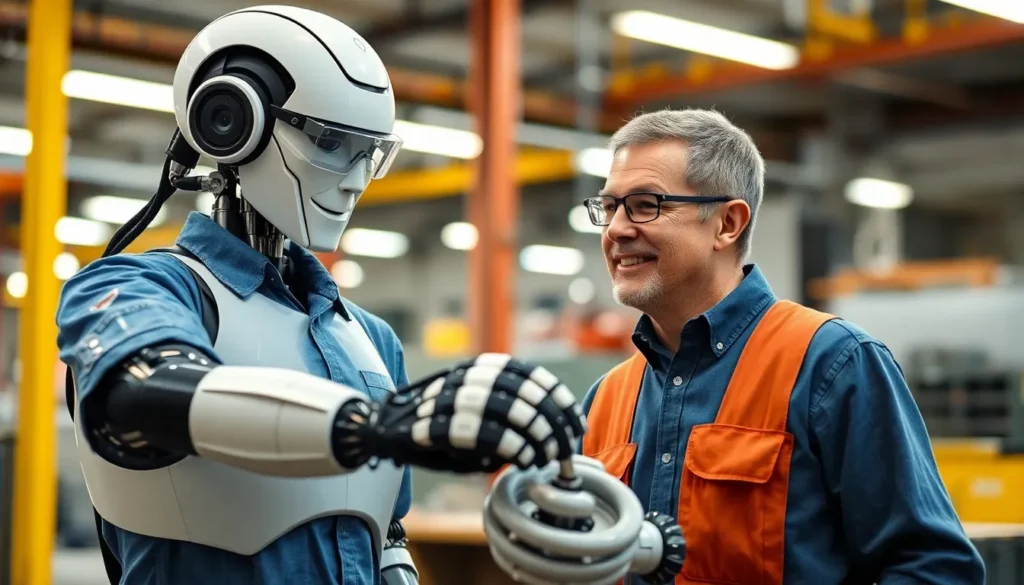
Advanced automation technology boasts several key innovations that drive efficiency and enhance operational capabilities across industries. Notably, the integration of robotics and artificial intelligence (AI) showcases how these technologies combine for optimal performance, while machine learning applications illustrate the adaptive nature of automation systems.
Robotics and AI Integration
Robotics and AI integration enables machines to execute complex tasks with high precision. Robotics enhances mechanical capabilities, allowing for consistent performance in manufacturing and logistics. AI adds intelligence, empowering robots to learn from their environments, adapt to changes, and make independent decisions. Examples include collaborative robots (cobots) that work alongside humans, improving worker safety and productivity. Industry reports show a 30% increase in productivity where robotics and AI systems are employed together.
Machine Learning Applications
Machine learning applications revolutionize automation by enabling systems to analyze vast datasets and improve over time without human intervention. These systems recognize patterns and develop predictive models, facilitating enhanced decision-making processes. Industries such as finance utilize machine learning for fraud detection, recognizing anomalies within transactions. In healthcare, machine learning aids in diagnostics by analyzing patient data for more accurate results. Research indicates that businesses implementing machine learning experience a 20% reduction in operational costs, showcasing its transformative impact.
Benefits of Advanced Automation Tech
Advanced automation technology offers significant advantages to organizations, enhancing performance and competitiveness. Key benefits include increased efficiency and cost reduction.
Increased Efficiency
Increased efficiency stems from automating repetitive tasks, allowing employees to focus on value-added activities. Processes that previously required extensive manual effort can now be completed rapidly and accurately by machines. Automation reduces errors in data entry and processing, leading to higher-quality outputs. Furthermore, the integration of AI and machine learning enables continuous process improvement by learning from historical data and optimizing workflows accordingly.
Cost Reduction
Cost reduction is a critical benefit of advanced automation technology. Automation decreases labor costs by minimizing the need for manual intervention in routine tasks. Additionally, it optimizes resource utilization, resulting in lower operational expenses. By streamlining workflows and reducing waste, organizations can achieve significant savings. As a result, businesses can reallocate financial resources toward innovation and growth initiatives, further enhancing their competitive position in the market.
Challenges and Considerations
Advanced automation technology presents challenges that organizations must navigate effectively. Implementing such technologies requires careful planning and consideration of various factors that influence success.
Implementation Issues
Implementation issues frequently arise during the integration of advanced automation technologies. Companies often face obstacles such as legacy systems that are incompatible with new solutions. Proper infrastructure is essential to support automation technologies effectively. Additionally, integration complexity can lead to unexpected costs or delays, as organizations must account for software development, system testing, and interoperability among different platforms. Data security concerns also emerge, emphasizing the need for robust cybersecurity measures to protect sensitive information throughout the automation process.
Workforce Impact
The workforce impact of advanced automation technology is significant and multifaceted. While automation increases efficiency and productivity, it can also lead to job displacement for certain roles, particularly in repetitive or low-skilled positions. Workers may require reskilling or upskilling to adapt to the evolving job landscape as automation introduces new tasks that demand different skill sets. Organizations must prioritize training programs to facilitate this transition, ultimately creating a more versatile workforce. Furthermore, fostering a culture of adaptability and innovation within the workplace can help employees embrace technological changes positively.
Future Trends in Automation
Automation technologies continue to evolve rapidly, shaping the future across various industries. This section explores industry predictions and emerging technologies that will drive advanced automation.
Industry Predictions
- Increased AI Integration: Advanced automation will increasingly integrate AI capabilities, enhancing decision-making processes and operational efficiency. AI-enabled systems will analyze data more effectively, optimizing workflows and allowing for adaptive responses to changing market conditions.
- Growth of Cobots: Collaborative robots (cobots) will dominate workplaces, working alongside humans to enhance productivity without replacing jobs. Cobots will perform repetitive, mundane tasks, allowing employees to engage in more complex, creative responsibilities.
- Expansion of IoT Solutions: The Internet of Things (IoT) will expand significantly, with more devices connected to the cloud. This expansion will facilitate real-time data sharing and remote monitoring, improving operational oversight and resource management.
- Focus on Sustainability: Companies will adopt automation technologies that promote sustainability, reducing energy consumption and waste. Automated processes will enable businesses to achieve greater resource efficiency, aligning with global sustainability goals.
- Workforce Transition: The workforce will see a transition toward higher-skilled jobs, with a focus on technological literacy. Organizations will invest in training programs to equip workers with the skills necessary to thrive in an automated environment.
Emerging Technologies
- 5G Technology: The rollout of 5G will revolutionize automation by providing faster and more reliable connectivity. This enhanced speed will enable real-time data processing and communication between devices, crucial for IoT applications and smart factories.
- Edge Computing: Edge computing will gain traction, allowing data processing at the site of data generation. This advancement minimizes latency and optimizes response times, essential for applications requiring immediate analysis and action.
- Advanced Robotics: Innovations in robotics will lead to more sophisticated machines capable of performing complex tasks. These robots will include capabilities for perception, manipulation, and autonomous decision-making, further expanding their application range.
- Blockchain in Automation: Blockchain technology will enhance security and transparency in automated processes. By providing an immutable ledger, blockchain can support supply chain automation and ensure data integrity across transactions.
- Augmented Reality (AR) and Virtual Reality (VR): AR and VR will transform training and maintenance processes. These technologies will enable immersive experiences for workers, enhancing skill development and efficiency in task execution.
The synergy of these trends and technologies will define the future landscape of automation, creating opportunities for innovation and improved operational capabilities across sectors.
Advanced automation technology is reshaping the business landscape by driving efficiency and fostering innovation. As organizations embrace AI, robotics, and IoT, they’re not just cutting costs but also enhancing their competitive edge. The integration of these technologies allows for improved productivity and smarter decision-making, setting the stage for future advancements.
However, challenges remain, particularly regarding workforce adaptation and data security. Companies must prioritize reskilling and upskilling to ensure their employees thrive in this evolving environment. By addressing these challenges and leveraging the benefits of automation, businesses can position themselves for sustained growth in a rapidly changing market. The future of automation promises exciting opportunities for those willing to innovate and adapt.