In today’s tech-driven world, smart sensors are revolutionizing how we interact with our environment. These innovative devices collect and analyze data in real-time, transforming ordinary objects into intelligent systems. From smart homes to industrial applications, they play a crucial role in enhancing efficiency and improving decision-making.
As industries embrace automation, the demand for smart sensors continues to grow. They enable everything from monitoring air quality to optimizing energy consumption. With advancements in technology, these sensors are becoming more sophisticated, integrating seamlessly into the Internet of Things (IoT) ecosystem. Understanding their capabilities and applications is essential for anyone looking to stay ahead in this rapidly evolving landscape.
Overview of Smart Sensors
Smart sensors are intelligent devices equipped with advanced technology to collect, process, and transmit data. They enhance the functionality of applications across various domains, including smart homes and industrial environments.
Definition and Functionality
Smart sensors combine sensing elements with processing capabilities. They detect changes in physical conditions such as temperature, humidity, and pressure. These sensors analyze data in real-time, enabling timely decisions based on actionable insights. They transmit this information wirelessly, often integrating with cloud platforms or local networks for further analysis. A key feature includes adaptability, allowing them to respond to environmental changes automatically.
Types of Smart Sensors
Smart sensors fall into several categories based on their applications:
- Temperature Sensors: Measure ambient temperature, often used in HVAC systems and environmental monitoring.
- Pressure Sensors: Monitor pressures in gases or liquids, essential for industrial processes and automotive applications.
- Proximity Sensors: Detect the presence of objects without physical contact, frequently used in smartphone technology and security systems.
- Light Sensors: Assess illumination levels, commonly applied in smart lighting and energy conservation solutions.
- Humidity Sensors: Measure moisture levels in the air, important for weather stations and HVAC systems.
- Gas Sensors: Detect the presence of gases, vital for air quality monitoring and industrial safety.
Each sensor type serves distinct functions, catering to the unique requirements of its application areas within the smart technology landscape.
Applications of Smart Sensors
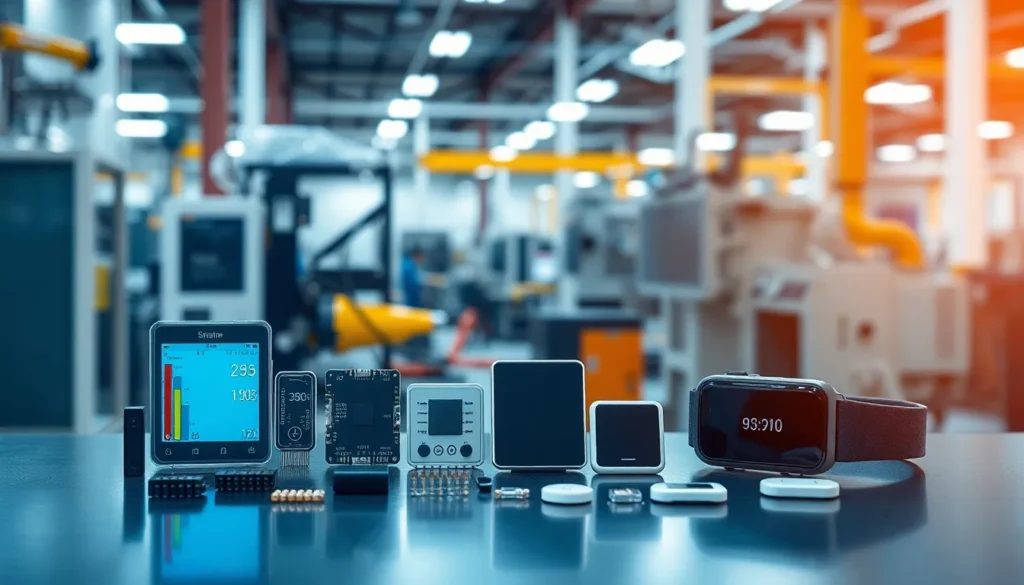
Smart sensors play a critical role in various sectors by enhancing operational efficiency and enabling data-driven decision-making. Their applications are vast and impact everyday life significantly.
Industrial Automation
Smart sensors are fundamental in industrial automation, driving efficiency and accuracy in manufacturing processes. These sensors monitor conditions such as temperature, pressure, and humidity, allowing for precise control of machinery. For example, temperature sensors maintain optimal heat levels in equipment, ensuring consistent performance. Pressure sensors detect inconsistencies in fluid flow, preventing breakdowns. Smart sensors also facilitate predictive maintenance, where data analysis predicts equipment failures before they occur, reducing downtime and maintenance costs.
Smart Homes
In smart homes, sensors create connected environments that optimize energy use and enhance security. Motion sensors can detect occupancy patterns, adjusting lighting and heating based on presence. Smart thermostats utilize temperature and humidity sensors to optimize climate control, leading to energy savings. Additionally, smoke and gas sensors enhance safety by providing real-time alerts in case of danger. The integration of these sensors with IoT platforms allows homeowners to monitor and control devices remotely, further elevating convenience and security levels.
Healthcare
Smart sensors significantly improve healthcare delivery by enabling continuous monitoring of patients. Wearable sensors track vital signs such as heart rate and oxygen levels, allowing healthcare providers to respond promptly to abnormalities. For instance, glucose monitors alert diabetic patients to critical changes, facilitating timely interventions. Environmental sensors in hospitals manage conditions like air quality and sanitation, contributing to patient safety. The data gathered from these sensors also supports research and enhances personalized medical treatments, ultimately improving patient outcomes.
Benefits of Smart Sensors
Smart sensors offer numerous advantages, enhancing efficiency and improving data accuracy in various applications. Their integration into systems significantly optimizes operations and decision-making processes.
Enhanced Efficiency
Enhanced efficiency represents a primary benefit of smart sensors. Smart sensors streamline operations across industries by automating tasks and enabling real-time monitoring. They continuously gather and analyze data, facilitating quick responses to changing conditions. For instance, smart irrigation systems use soil moisture sensors to adjust water usage, conserving resources while maintaining optimal crop conditions. This level of automation reduces human error and minimizes energy consumption, further improving operational workflows.
Data Accuracy
Data accuracy plays a crucial role in the effectiveness of smart sensors. These devices are designed to capture precise measurements and trends, translating data into actionable insights. High-quality sensors ensure reliable information, which is vital for informed decision-making. In healthcare, wearable sensors continuously track vital signs, providing accurate health data that enables timely medical interventions. In industrial environments, accurate pressure and temperature readings facilitate better risk management, ensuring safety and compliance with regulations. By providing precise data, smart sensors elevate operational standards, leading to improved performance across various sectors.
Challenges in Smart Sensor Technology
Smart sensor technology faces various challenges that can hinder its widespread adoption and effectiveness. These challenges include cost considerations and security issues, which impact both implementation and functionality.
Cost Considerations
Cost remains a significant barrier for many industries adopting smart sensors. Initial investment costs for smart sensors can be high, encompassing the purchase of devices, installation, and integration with existing systems. Maintenance and operational expenses can further strain budgets, particularly for organizations in resource-constrained environments. For instance, high-precision temperature sensors may exceed $1,000 per unit, deterring small businesses from investing. Additionally, the long-term benefits of smart sensors must often justify these costs, creating pressure on decision-makers to prove return on investment before committing funds.
Security Issues
Security issues present critical challenges for smart sensor technology. Vulnerable devices in the Internet of Things (IoT) ecosystem can become targets for cyber-attacks, risking sensitive data and operational integrity. Unsecured smart sensors may lead to unauthorized access and data breaches, which can have severe consequences for organizations, including financial loss and reputational damage. The potential for data interception during wireless transmission underscores the need for robust encryption and secure communication protocols. Ensuring these measures are in place greatly affects the overall trust and reliability of smart sensors in sensitive environments like healthcare and critical infrastructure.
Future Trends in Smart Sensors
The future of smart sensors revolves around technological advancements and broader integration within the Internet of Things (IoT). These trends are set to redefine capabilities and applications across various sectors.
Integration with IoT
Integration with IoT platforms significantly enhances the functionality of smart sensors. Smart sensors seamlessly connect to networks, enabling real-time data sharing and interoperability among devices. For instance, smart home devices utilize temperature and humidity sensors to adjust heating or cooling systems autonomously. This integration enables remote access and control through smartphones, increasing user convenience and efficiency. The growth of 5G technology allows for faster data transmission, facilitating more responsive interactions between smart sensors and other devices within the IoT ecosystem. Additionally, integrating artificial intelligence (AI) with smart sensors empowers predictive analytics, supporting proactive decision-making and improved system performance.
Advances in Technology
Advances in technology drive the evolution of smart sensors, resulting in improved sensitivity and functionality. Emerging technologies like machine learning and edge computing enhance data processing capabilities, allowing sensors to analyze information locally rather than relying solely on centralized cloud computing. This shift reduces latency and improves response times for critical applications, such as emergency alerts. Furthermore, miniaturization of components allows for the development of smaller, more efficient sensors, enabling their use in constrained environments, including wearable technology. Enhanced battery technologies also contribute to longer-lasting and more reliable sensors, reducing maintenance costs and continuous service support. With ongoing innovations, smart sensors are poised to reach new heights of efficiency and integration in a variety of fields.
Smart sensors are redefining the landscape of technology by enhancing operational efficiency and enabling informed decision-making. Their ability to collect and analyze data in real-time positions them as essential tools across various sectors, from healthcare to industrial automation. As organizations continue to embrace automation and the Internet of Things, the role of smart sensors will only grow.
Despite challenges like costs and security concerns, the ongoing advancements in technology promise a bright future for smart sensors. With innovations such as 5G and machine learning, these devices will become even more capable and integrated into everyday life. The continued evolution of smart sensors will undoubtedly lead to smarter solutions and improved outcomes across multiple industries.